
High Density Interconnect (HDI) PCBs occupy a unique position in the Electronics Manufacturing landscape: they push the boundaries of what is manufacturable, combining Microvia Technology, fine-line routing, and advanced materials in structures that are orders of magnitude more complex than the four-layer boards that define conventional PCB Fabrication. With this complexity comes an equally complex set of quality requirements. HDI PCBs must meet electrical performance targets, environmental durability standards, and long-term reliability requirements that cannot be verified by visual inspection alone. The IPC standards system exists precisely to define those requirements in a language that manufacturers, designers, and customers can all understand and agree upon.
For engineers specifying Hdi Boards, and for quality professionals responsible for accepting them, understanding the role of IPC standards is not optional. It is the framework within which every other quality decision is made. Without IPC standards, there is no common language for describing what a compliant board looks like, how it should be tested, and what constitutes acceptable variation from the ideal. This article examines the key IPC standards that apply to Hdi Pcb quality assurance, explains how they relate to each other, and provides guidance on applying them correctly in practice.
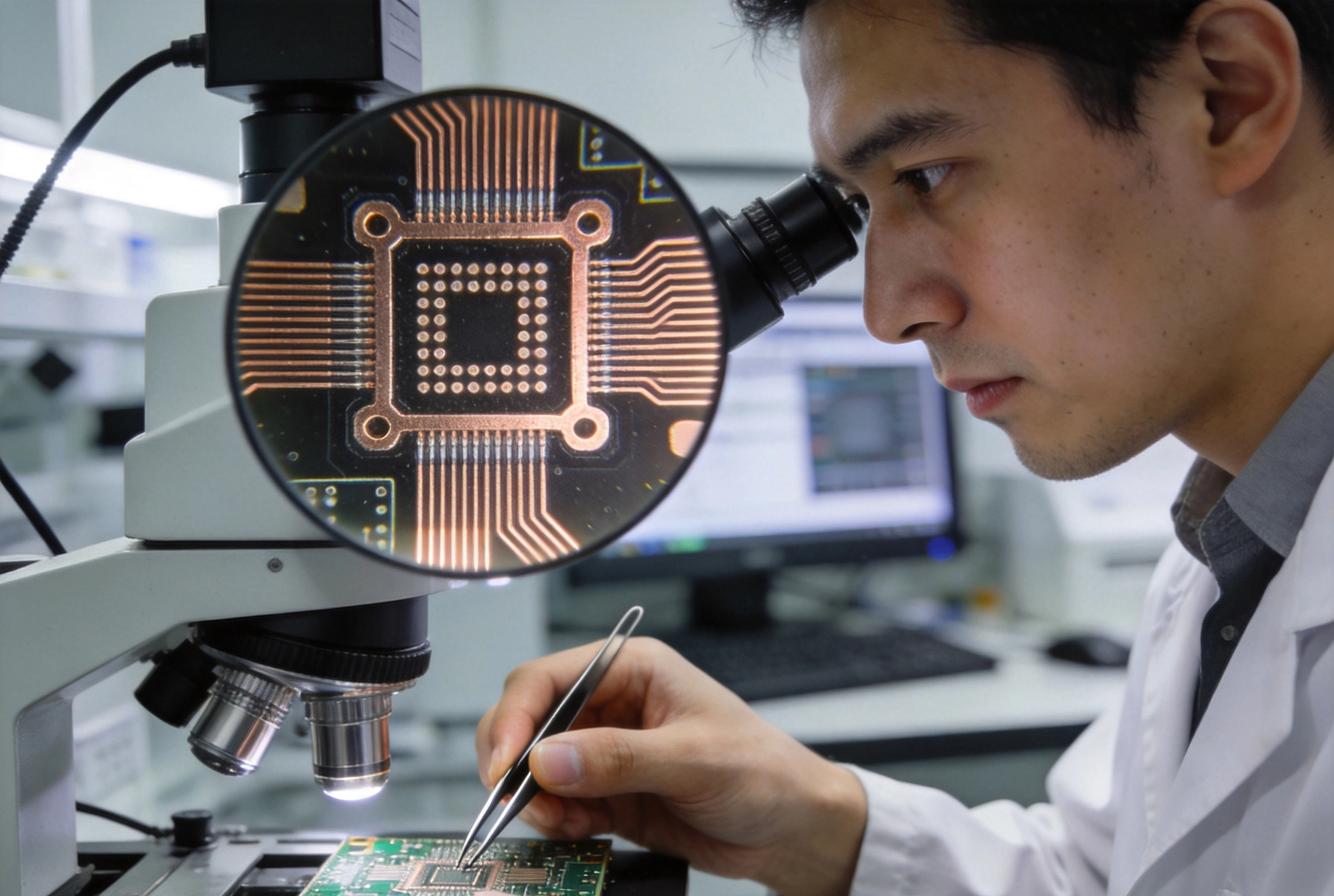
The IPC standards system is built around a set of interlocking documents that cover design, materials, manufacturing process, and end-product acceptance for electronic assemblies and their components. For HDI PCBs specifically, the most relevant standards fall into four categories: design and land pattern standards, material specifications, performance and qualification standards, and visual acceptance criteria. Each category serves a different purpose, and understanding the boundaries between them is essential to using them correctly.
IPC standards are voluntary consensus documents in most jurisdictions. They become mandatory only when a customer contract specifies them or when a regulatory framework incorporates them by reference. However, in practice, IPC compliance is effectively required in most commercial and industrial electronics markets because customers and supply chains have built their quality systems around the IPC framework. An HDI board that does not meet IPC standards will face significant commercial barriers regardless of its actual electrical performance.
The standards are maintained by IPC technical committees that include representatives from PCB manufacturers, OEMs, raw material suppliers, and independent test laboratories. Revisions are published on a regular cycle, and users are expected to track revisions and update their quality agreements accordingly. Using an outdated revision of a standard can create gaps in quality coverage or allow acceptance of conditions that the current revision would require rejection of.
Before any HDI board can be fabricated, the materials it is made from must meet specifications. IPC-4101 is the base specification for rigid base materials, covering the dielectric substrates, prepregs, and bonding films used in Multilayer Pcb construction. For Hdi Boards, which often use non-standard dielectrics, thin cores, and build-up films, IPC-4101 defines the performance categories and specification sheets that characterize each material.
HDI boards frequently use materials that go beyond standard FR-4. These include high-Tg epoxy systems, polyimide blends, BT resin substrates, and Ajinomoto Build-up Film (ABF) for the build-up layers in Sequential Lamination processes. Each of these material systems is defined by an IPC-4101 specification sheet that specifies the material's electrical properties (dielectric constant, loss tangent, insulation resistance), thermal properties (glass transition temperature, decomposition temperature, CTE), mechanical properties (laminate strength, flexural modulus), and dimensional stability requirements.
The quality assurance requirement from IPC-4101 is that the PCB manufacturer must use materials from the qualified specification sheet. For HDI boards using build-up films or specialty prepregs, this means the manufacturer must source from an IPC-4101 qualified material rather than an equivalent substitute, and must maintain traceability from the finished board back to the specific material lot used. This traceability is critical for failure analysis: when a board fails in the field, understanding which material lot was used is essential to determining whether the failure was material-related.
IPC-6012 is the primary performance specification for rigid printed boards, including HDI boards. It defines the qualification and performance requirements for rigid boards, including electrical performance, mechanical performance, and environmental performance. For HDI boards, IPC-6012 establishes the baseline requirements that a board must meet to be considered qualified for its intended application.
IPC-6012 qualification involves a defined set of tests performed on representative sample boards from the production lot. These tests include insulation resistance, dielectric withstanding voltage, peel strength, plated-through-hole (PTH) integrity, flexural strength, and for HDI boards, Microvia integrity tests that are not required for conventional boards. The qualification test regimen must be completed and passed before a manufacturer can ship HDI boards as IPC-6012 compliant.
One of the most important aspects of IPC-6012 for HDI boards is the distinction between qualified construction types. The standard defines a series of construction types, identified by a number and a suffix, that correspond to specific board structures. An HDI board with any-layer blind and Buried Vias has a different construction type than a board with only through-hole vias, and the qualification tests required for each construction type are different. A board purchased as IPC-6012 compliant but built to a different construction type than the one actually delivered is not compliant with the standard, regardless of how well it performs electrically.
The standard also defines three performance classes, similar to IPC-A-610, with Class 3 being the most stringent. For aerospace, defense, and medical life-critical applications, Class 3 requirements must be specified and met. The performance class must be explicitly stated in the purchase order and on the fabrication drawing, because the acceptance criteria for many test parameters differ between classes.
While IPC-6012 defines the qualification and performance requirements for HDI boards, IPC-A-600 defines the visual acceptance criteria that inspectors use to evaluate individual boards during incoming inspection, in-process inspection, and final acceptance. IPC-A-600 covers the full range of PCB types, including HDI boards, and provides illustrated criteria for evaluating surface conditions, conductor integrity, hole quality, and laminate defects.
For HDI boards, IPC-A-600's most relevant sections cover Microvia acceptance criteria, microvia void criteria, conductor width and spacing, surface defects, and laminate integrity. The microvia criteria are particularly important because Microvias are smaller and more sensitive to process variation than through-hole vias, and their acceptance limits are correspondingly tighter. IPC-A-600 specifies maximum allowable voids in plated Microvias, minimum plating thickness for microvia barrels, and criteria for microvia integrity after thermal stress testing.
IPC-A-600 is organized around the three performance classes, with each section specifying the acceptance criteria for each class. Class 3 microvia criteria, for example, allow smaller void percentages and require higher plating thicknesses than Class 1. Inspectors evaluating HDI boards must know which class applies to the board under evaluation and apply the corresponding criteria, not the criteria from a different class.
IPC-2221 is the generic standard for Pcb Design, covering design strategy, materials selection, Thermal Management, and electrical performance considerations. It provides the foundational design guidance that informs all subsequent design decisions, including HDI-specific design rules. While IPC-2221 does not impose specific acceptance criteria, it provides the engineering rationale for many of the design rules that appear in other standards.
IPC-2222, titled "Sectional Standard for Organic Rigid PCB Fabrication," establishes design capabilities that fabricators must be able to demonstrate for specific construction types. It defines minimum conductor widths, spacings, Annular Ring dimensions, and other feature sizes as a function of the board construction type. For HDI designs, IPC-2222 specifies the minimum features that a fabricator must be able to produce for each HDI construction type.
For engineers designing HDI boards, IPC-2221 and IPC-2222 provide the design rules that translate into fabricator capability. A design that follows IPC-2221 recommendations is likely to be producible by any competent HDI fabricator. A design that pushes beyond IPC-2222 minimum capabilities requires a specific fabricator with advanced capabilities, and may carry higher cost and lower yield as a consequence.
Beyond the general PCB standards, there are standards specifically developed for advanced technologies including HDI. IPC-4104 defines requirements for high-speed/frequency laminate and prepreg materials, covering the specialized dielectrics used in RF and high-speed digital HDI boards. These materials have electrical performance requirements that go beyond the scope of IPC-4101's general base material specifications.
For boards using Microvia Technology, the IPC has developed specific test methods and acceptance criteria that address the unique failure modes of microvias. These include thermal cycling tests that stress microvia structures specifically, resistance-to-solder热水 testing, and acoustic microimaging (C-SAM) for detecting microvia voids and delamination. These tests are referenced in IPC-6012 for HDI construction types and in the applicable performance class requirements.
The IPC also publishes application-specific standards that may impose additional requirements beyond the general PCB standards. For example, boards intended for automotive applications may need to comply with automotive-specific Quality Management System requirements in addition to the IPC standards. Boards for medical applications may need to comply with Iso 13485 and the applicable FDA or MDR requirements. The IPC standards are necessary but not always sufficient for these applications.
HDI microvias are among the most thermally stressed features in a PCB. Each thermal cycle, whether from power on/off, ambient temperature changes, or reflow during assembly, causes differential expansion between the copper barrel and the Dielectric Material in the microvia. Over hundreds or thousands of cycles, this differential expansion can cause barrel cracking, delamination at the via interface, or conductive anodic filament (CAF) growth along the via barrel. Verifying that an HDI board is resistant to these failure modes requires specific reliability testing beyond the basic IPC-6012 qualification regimen.
IPC-6012 references thermal cycling tests for HDI boards, specifying the number of cycles, the temperature range, and the acceptance criteria for post-stress electrical testing. For high-reliability applications, extended thermal cycling (often 500 to 1,000 cycles rather than the standard 100 to 300) is specified, along with cross-section analysis of representative microvias after the cycling to verify structural integrity. This extended testing is not part of the standard IPC-6012 qualification and must be specified separately in the purchase order.
CAF testing is another critical requirement for HDI boards used in humid or high-reliability environments. CAF growth is an electrochemical migration process where conductive copper filaments grow along the glass fibers in the dielectric between adjacent conductors or vias. HDI boards with fine spacings between microvias are particularly susceptible to CAF because the electric field between adjacent features is higher. IPC-6012 specifies CAF resistance testing for HDI construction types, but the test is typically performed only on qualification samples, not on every production board.
Many of the most critical quality verifications for HDI boards cannot be performed on the finished board without destroying it. Microsectioning, also called destructive physical analysis (DPA), involves mounting a representative coupon from the board in epoxy, polishing it to expose the internal cross-sectional structure, and examining it under a microscope. For HDI boards, microsectioning is the definitive method for verifying Microvia Plating Quality, conductor geometry, dielectric layer thickness, and laminate void content.
IPC-6012 specifies the requirements for microsectioning, including the location and number of coupon specimens, the polishing procedure, the magnification level for evaluation, and the acceptance criteria for each feature type. For HDI microvia evaluation, the microsection must clearly show the plating thickness in the barrel, the presence or absence of voids, the interface between the microvia and the landing pad, and the overall geometry of the dielectric structure.
The interpretation of microsection results requires experience and training. Plating thickness measured at one cross-sectional plane may not represent the minimum thickness throughout the barrel, which may be thinner at the top or bottom due to the electroplating process. Voids visible in a microsection may or may not be representative of the void content throughout the barrel. Experienced analysts understand these limitations and know how to correlate microsection observations with other test data, such as electrical test results or C-SAM imaging.
Production acceptance testing for HDI boards involves a combination of electrical testing, visual inspection, and analytical testing. Electrical testing verifies continuity and isolation for all nets, including the high-speed signal paths that are critical in HDI designs. For impedance-controlled boards, time-domain reflectometry (Tdr) testing verifies that the impedance of critical traces is within the specified tolerance across the panel. Continuity testing of microvia chains, which are fabricated as repeating structures, provides a rapid indicator of microvia process quality.
Visual inspection per IPC-A-600 covers surface conditions, conductor integrity, hole quality, and defect categories that can be identified without destructive analysis. For HDI boards, the visual inspection criteria for microvias are particularly stringent, especially for Class 3 applications. Automated Optical Inspection (AOI) systems are commonly used for production inspection, but AOI cannot reliably detect internal defects such as microvia voids, which require C-SAM or microsectioning for detection.
C-SAM (C-mode Scanning Acoustic Microscopy) is widely used for HDI board acceptance to detect internal delamination, voids in microvia plating, and laminate inhomogeneity. C-SAM is non-destructive and can scan entire production boards, providing a map of internal defect locations across the board. For high-reliability HDI boards, C-SAM inspection is often specified as a standard production acceptance requirement, not just a qualification test.
Applying IPC standards effectively in an HDI quality assurance program requires more than owning copies of the relevant documents. It requires building a quality system that uses the standards as its framework, with defined processes for specifying requirements, verifying compliance, and managing non-conformances.
The first step is to specify the applicable IPC standards explicitly in the purchase order and fabrication drawing. The standard revision, performance class, and any additional requirements (such as extended thermal cycling or C-SAM inspection) must be stated explicitly. A purchase order that says "IPC compliant" without specifying the standard number, revision, class, and construction type is legally ambiguous and practically useless in a quality dispute.
The second step is to verify that the chosen manufacturer is qualified to the specified standards for the specific HDI construction type. Not all IPC-certified manufacturers are qualified for all HDI construction types. A manufacturer certified to IPC-6012 for standard multilayer construction is not necessarily qualified for Any-layer Hdi construction. The manufacturer's qualification scope should be reviewed and confirmed before placing an order.
The third step is to define a receiving inspection protocol that references IPC-A-600 for visual criteria and IPC-6012 for analytical test requirements. Receiving inspection should verify at minimum that the correct IPC-4101 materials were used (through material traceability documentation), that the board passes all electrical tests, that the visual appearance meets the applicable class criteria, and that the required analytical tests (microsection, C-SAM) have been completed and passed on representative samples from the lot.
IPC standards are the common language of Hdi Pcb quality assurance. They provide the framework for specifying requirements, verifying compliance, and resolving disputes between manufacturers and their customers. For HDI boards, which are among the most complex and demanding PCB types, the standards system is indispensable because it addresses the specific quality challenges that Hdi Technology presents: microvia integrity, thin dielectric reliability, advanced material performance, and fine-line capability.
Using IPC standards correctly requires understanding their structure and their limitations. The standards define minimum acceptance requirements, not optimal quality targets. They provide criteria for finished boards, not process recipes for achieving them. And they are living documents that change with each revision, requiring active management of revision status and update cycles. Engineers and quality professionals who invest in deep familiarity with the IPC system for HDI boards develop the judgment needed to specify the right requirements, evaluate compliance accurately, and resolve the complex quality questions that Hdi Technology inevitably produces.
IPC-6012 defines the qualification requirements and performance specifications that a manufacturer must meet to produce HDI boards. IPC-A-600 defines the visual acceptance criteria that inspectors use to evaluate individual boards. IPC-6012 requires testing and analytical verification, while IPC-A-600 provides the criteria for visual inspection. Both are needed for a complete quality assurance program.
The HDI construction type should be specified on the fabrication drawing based on the design requirements. The construction type determines the microvia configuration, the number of build-up layers, and the lamination sequence. If you are unsure which construction type your design requires, consult your manufacturer, who can recommend the minimum construction type that supports your design features while meeting your reliability requirements.
IPC standards are voluntary consensus standards in most jurisdictions. They become mandatory when specified in a purchase contract, referenced by a higher-tier specification (such as an aerospace or Automotive Quality standard), or incorporated by reference in a regulation. In practice, most commercial and industrial customers require IPC compliance as a condition of purchase, making them effectively mandatory in those markets.
Required tests depend on the specified standard and performance class. For IPC-6012 Class 3 HDI boards, required tests typically include microsectioning (for Microvia Plating Quality and dielectric integrity), thermal cycling (to verify Microvia Reliability), and C-SAM inspection (for internal void and delamination detection). The specific test parameters and sample sizes are defined in IPC-6012 for the applicable construction type.
Microsectioning is typically performed on qualification samples (the first production lot of a new design or construction type) and on production process qualification samples at defined intervals. For high-reliability applications, some customers require microsectioning on every production lot or on a statistical sample from each lot. The specific requirement should be stated in the purchase order based on the application's reliability requirements.
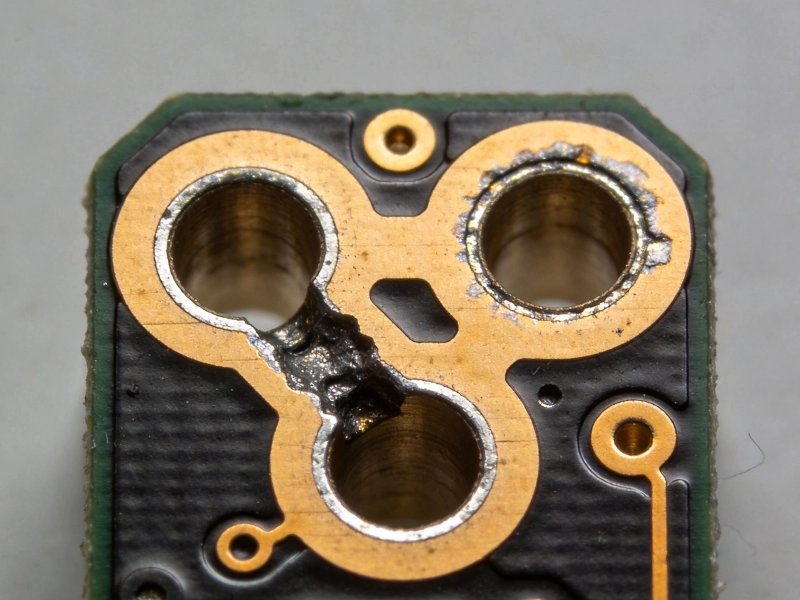
The Impact of Plating Voids on HDI Interconnect ReliabilityJuly/10/2026
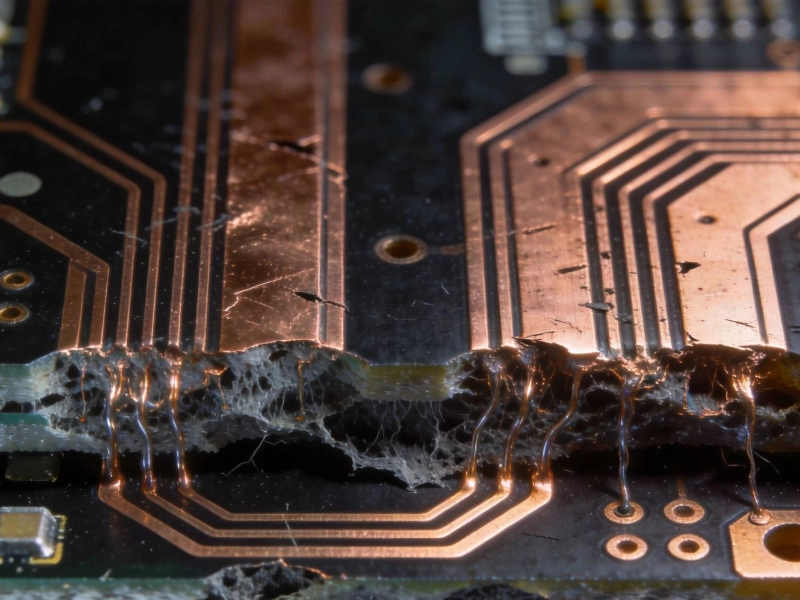
Conductive Anodic Filament (CAF) Resistance in High-Density BoardsJuly/31/2026
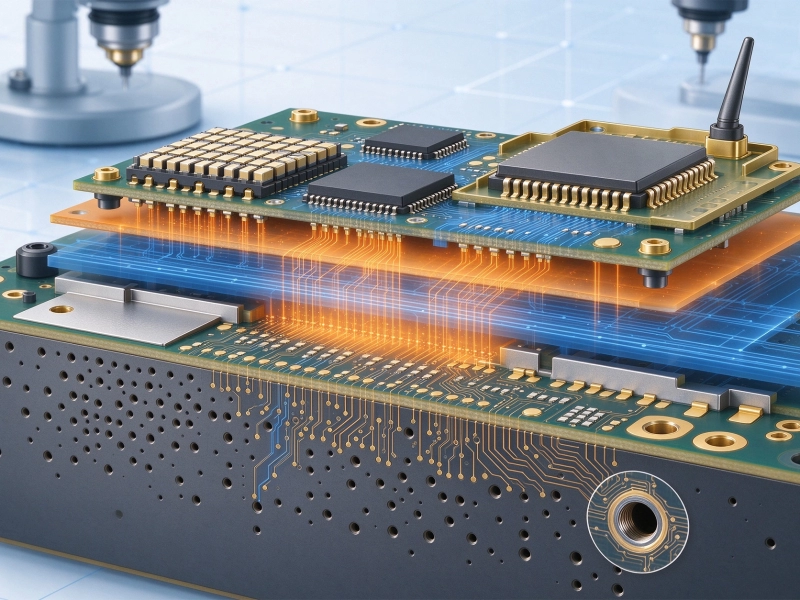
The Impact of HDI on LiDAR and Radar Sensor PerformanceOctober/15/2026
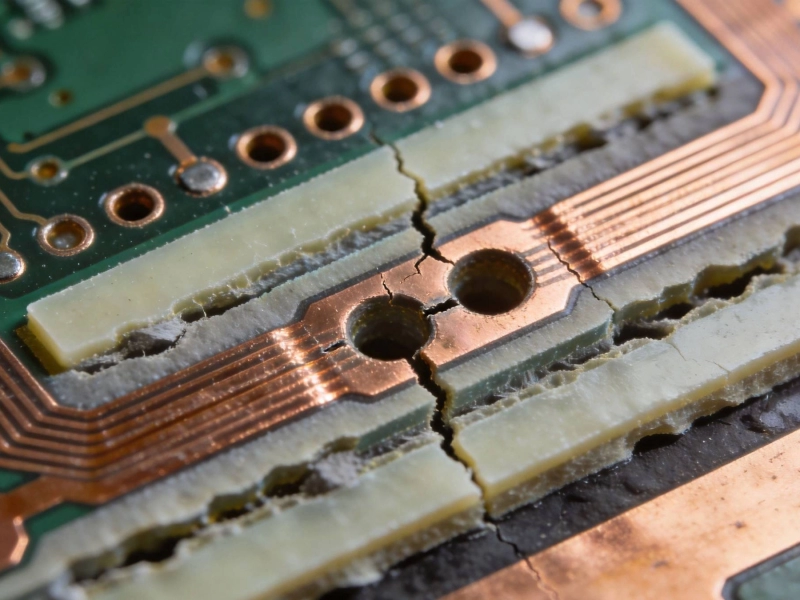
Understanding and Preventing Microvia Cracking in Thermal CyclingJune/12/2026
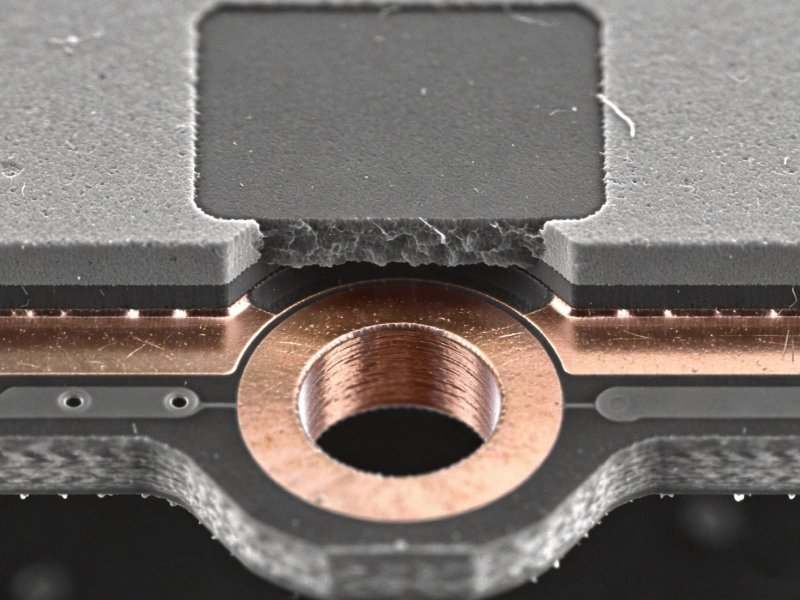
Reliability Challenges of Via-in-Pad Plating Filled (VIPPO) TechnologySeptember/30/2026
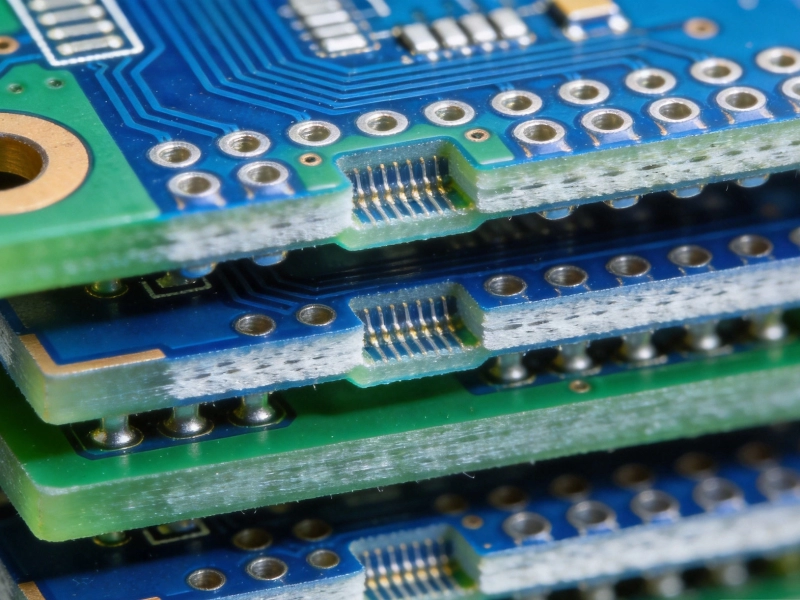
An Introduction to Microvia Technology in HDI PCBsJuly/24/2026
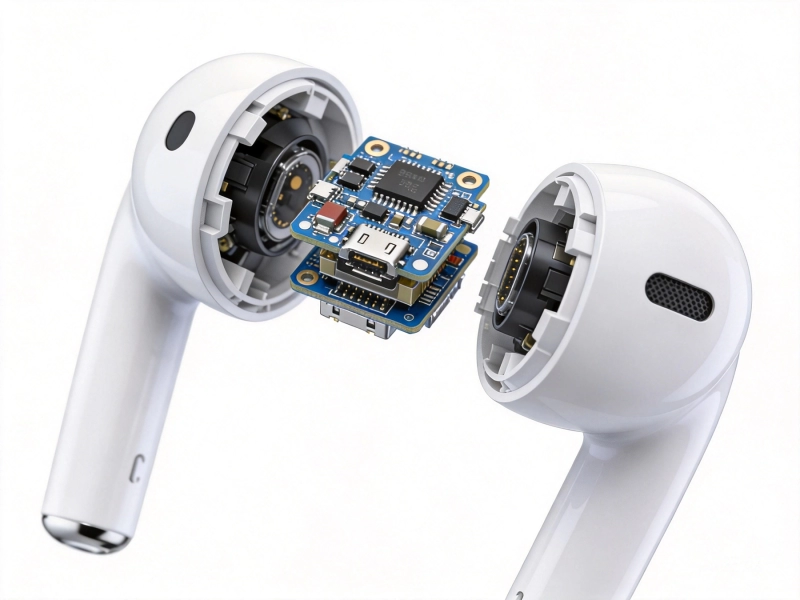
Enabling Compact Designs in True Wireless Stereo (TWS) EarbudsAugust/06/2026
High-Reliability HDI Solutions for PLCs and Motor DrivesSeptember/16/2026