Open Nav

The True Wireless Stereo earbud market has undergone a remarkable transformation in recent years. What began as relatively large devices with questionable comfort has evolved into sleek, pocket-sized powerhouses that fit virtually imperceptibly in the ear canal. This Miniaturization wasn't accidental—it resulted from deliberate engineering decisions spanning component technology, Pcb Design, battery innovation, and acoustic engineering. Understanding how manufacturers achieve these compact designs reveals the sophisticated technology hidden inside seemingly simple devices.
Space constraints in TWS earbuds are extraordinary. Each earbud must house Bluetooth radio circuitry, audio processing, amplification, microphone systems, battery, and acoustic drivers—all squeezed into form factors that comfortably nestle in the outer ear or ear canal. Every cubic millimeter matters, and trade-offs between features, battery life, and size create design challenges that push Electronics Manufacturing to its limits.
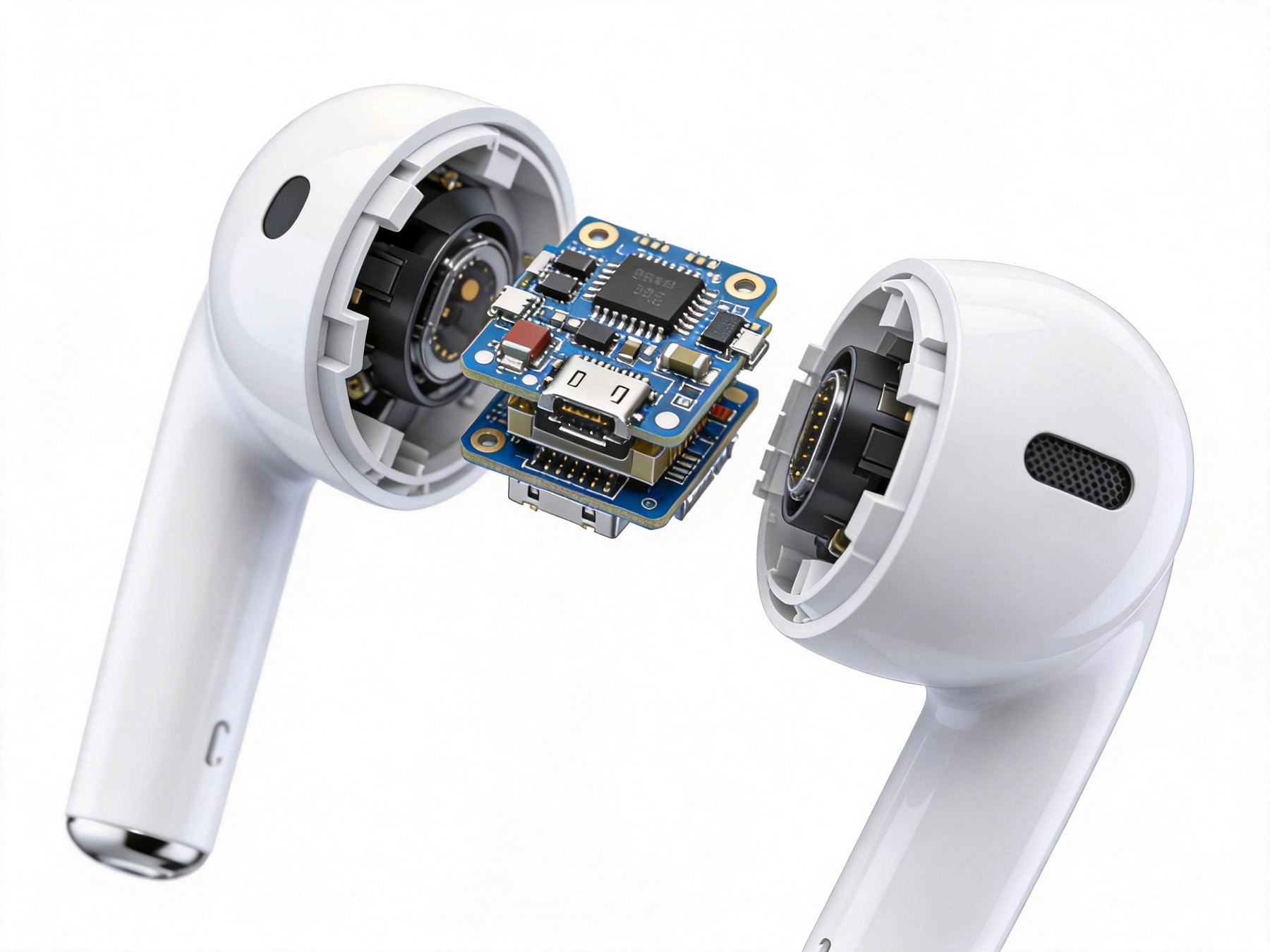
Compact TWS design requires balancing multiple competing requirements that traditionally would demand larger enclosures. Understanding these constraints helps explain the engineering decisions that enable modern earbud Miniaturization.
Every component inside a TWS earbud competes for the same limited space. The battery often claims 30-40% of internal volume, leaving remaining space for driver, electronics, microphones, and structural elements. Acoustic performance requirements dictate minimum driver size, while battery life expectations establish minimum battery capacity. These constraints define the fundamental trade-off space designers must navigate.
Manufacturers make deliberate choices about where to allocate precious space. Some prioritize battery life, accepting larger earbuds. Others optimize for comfort and discretion, accepting shorter listening time. The best designs achieve reasonable balance across all dimensions, but the trade-offs reveal which priorities drive each product's architecture.
Electronic components generate heat, and enclosed devices with limited surface area struggle to dissipate thermal energy. The proximity of the human ear—effectively a thermal sink—creates unique thermal dynamics. Excessive heat affects comfort, battery performance, and component reliability. Compact designs must manage thermal issues within tight space budgets that larger devices wouldn't face.
Pcb Design for Thermal Management in TWS applications requires careful attention to component placement, Thermal Vias, and heat distribution paths. Processing chips generate concentrated heat that must spread to larger surfaces or dissipate through conduction to the outer shell. Designers balance Thermal Performance against the acoustic and structural requirements that also compete for shell volume.
TWS earbuds face mechanical stresses that larger electronics don't encounter. Drop resistance, water resistance, and long-term durability must all be engineered into tiny enclosures. Structural elements that protect electronics consume space that might otherwise house components, creating fundamental tension between durability and miniaturization.
The shell itself must serve multiple purposes—acoustic enclosure, structural protection, cosmetic surface, and potentially antenna housing. These requirements often conflict, forcing designers to find creative solutions that satisfy multiple constraints simultaneously. Materials selection, geometric design, and manufacturing processes all contribute to achieving structural goals within size constraints.
The printed circuit board inside TWS earbuds represents perhaps the most critical enabler of miniaturization. PCB architecture determines not just size but also how effectively other components can integrate within the overall design.
Modern TWS earbuds leverage highly integrated system-on-chip solutions that combine multiple functions in single packages. Bluetooth radio, baseband processor, audio codec, and power management may occupy a single chip-scale package. This integration dramatically reduces board space compared to equivalent discrete implementations.
The trade-off involves flexibility versus density. Highly integrated chips simplify board design but limit component substitution and may constrain feature sets. Some manufacturers use multiple chips to achieve differentiation, accepting larger board area for competitive advantage. Others standardize on integrated platforms to minimize size and simplify manufacturing.
Traditional rigid PCBs cannot efficiently fill the irregular volumes available inside earbud enclosures. Flexible printed circuits bend to conform to curved internal surfaces, utilizing space that rigid boards would waste. Rigid-flex constructions—combining rigid sections for component mounting with flexible interconnects—optimize both manufacturing efficiency and space utilization.
Flexible circuits add cost and manufacturing complexity but enable designs impossible with rigid boards alone. The flexibility also provides mechanical resilience, absorbing shock and vibration that rigid assemblies might transmit to components. For products requiring both miniaturization and durability, flexible circuits often prove essential.
Vertical space utilization through component stacking multiplies the effective board area without increasing footprint. Components can be stacked directly atop each other using thin package formats and appropriate Thermal Management. Some memory and passive components particularly suit vertical integration approaches.
Die stacking takes vertical integration further by combining unpackaged semiconductor dies in single packages. This approach achieves densities impossible with packaged components but requires sophisticated manufacturing capabilities and thorough thermal verification. The yield challenges and testing complexity of stacked-die packages add cost that only high-volume applications can justify.
Component choices in TWS design heavily influence achievable miniaturization. Selecting components optimized for space-constrained applications requires understanding how different technologies compare.
Every resistor, capacitor, and inductor consumes board space. Modern ultra-compact passives—0201, 01005, and even smaller packages—dramatically reduce passive footprint compared to older 0402 or 0603 packages. However, smaller packages present manufacturing challenges including placement accuracy requirements and reduced standoff height that affects soldering reliability.
Intelligent passive allocation balances size reduction against manufacturing risk. Critical circuits may warrant larger packages for reliability margin, while non-critical functions can leverage the smallest available sizes. Design rules should differentiate passive sizing based on circuit function rather than applying uniform miniaturization across all circuits.
Audio components in TWS earbuds must balance acoustic performance against space constraints. Micro speakers (receivers) must produce satisfactory sound quality while fitting within shell geometries optimized for human comfort. Microphone solutions—including those for ANC (active noise cancellation)—must capture voice and environmental sound while fitting invisibly within enclosure contours.
MEMS microphones have largely replaced traditional electret microphones in modern TWS designs, offering dramatically smaller size with improved performance consistency. The directional characteristics and frequency response of MEMS devices suit the beamforming and noise cancellation algorithms that distinguish premium earbuds from budget alternatives.
Bluetooth antenna design in compact TWS earbuds presents particular challenges. The antenna must radiate efficiently despite limited space and proximity to the human head—which absorbs and scatters radio waves. Antenna designers must balance radiation efficiency, impedance matching, and body effects within severe geometric constraints.
Modern Bluetooth SoCs integrate radio front-end components that previously required discrete implementation. This integration reduces both board space and design complexity, enabling smaller earbuds with improved wireless performance. However, antenna matching networks and RF shielding may still require dedicated PCB area that competes with other functions.
Batteries typically represent the largest single component in TWS earbuds. Battery selection and integration strategy fundamentally affects achievable miniaturization and the listening time that consumers demand.
Coin cell batteries—small cylindrical cells resembling watch batteries—have largely been replaced by custom prismatic lithium-polymer cells in modern TWS designs. Prismatic cells can be shaped to fit irregular internal volumes, maximizing capacity within available space. The trade-off involves the additional packaging required for lithium-polymer cells and the safety considerations of pouch-type lithium batteries.
Cell capacity and cycle life requirements influence cell selection. Higher capacity cells enable longer listening time but may require larger volume. Cell chemistry affects both capacity and safety margins. Manufacturer cell selection reflects careful balancing of these factors against target product positioning and price point.
Compact TWS designs require equally compact battery management circuitry. Protection circuits preventing overcharge, over-discharge, and short-circuit conditions must fit alongside battery cells or on main PCBs. Some designs integrate protection circuitry directly into battery packs, reducing main board area requirements at the cost of reduced serviceability.
Charging circuitry—including charging contacts or wireless charging coils—adds further space requirements. USB-C charging requires mechanical connectors and their associated reinforcement. Wireless charging adds inductive coils and associated circuitry. These features compete for space that battery capacity might otherwise claim.
The fundamental trade-off in TWS battery design involves capacity (and thus listening time) against physical size. Larger batteries provide longer life but increase earbud dimensions and weight. Consumer preferences—often favoring smaller, lighter earbuds—push manufacturers toward aggressive miniaturization of battery systems.
Efficiency improvements in electronics and audio processing can partially offset battery size constraints. More efficient amplifiers, lower-power wireless protocols, and optimized signal processing all reduce power consumption, effectively providing more listening time from smaller batteries. This systems-level optimization has become increasingly important as raw battery energy density improvements have plateaued.
Sound quality determines product success in the TWS market. Acoustic requirements impose minimum dimensions that must be reconciled with overall miniaturization goals.
Larger speaker drivers generally produce deeper bass response and higher maximum output. However, earbud form factors constrain driver diameter—most TWS designs use drivers between 6mm and 12mm diameter. Premium products often specify larger drivers, accepting size penalties for acoustic performance advantages.
Driver technology has advanced to extract more performance from smaller diameters. Advanced diaphragm materials, powerful motor systems, and optimized acoustic enclosures all contribute to improved sound from compact drivers. However, physics imposes limits that further miniaturization cannot overcome without accepting acoustic performance compromises.
The acoustic chamber—the air volume between driver and ear canal—significantly affects bass response and overall sound signature. Miniaturization reduces available chamber volume, potentially degrading low-frequency performance. Designers must carefully optimize chamber geometry within shell constraints to maintain acceptable acoustic performance.
Port designs—including bass ports and pressure equalization vents—add complexity to acoustic engineering. These features require careful simulation and testing to ensure they contribute positively rather than introducing distortion or unwanted resonances. The additional volume some ports require creates further tension with miniaturization goals.
ANC systems require additional microphones—typically one facing outward to sample environmental noise and another facing inward to monitor sound at the eardrum. These microphones and their associated electronics add both size and power consumption. Effective ANC implementation must fit within miniaturization constraints while delivering the noise reduction performance consumers expect.
Feedforward ANC uses the external microphone alone, requiring less processing but offering limited adaptation to individual ear canal shapes. Feedback ANC uses the internal microphone, adapting to individual fit but potentially creating feedback instability. Hybrid systems combining both approaches deliver best performance but require additional components that increase size and complexity.
Compact TWS designs impose manufacturing challenges that affect assembly yields, test coverage, and ultimately product cost and reliability.
Placing and soldering ultra-small components requires precision equipment and careful process control. 01005 passives and chip-scale packages demand placement accuracies of 20-30 microns. Void formation in solder joints for these packages can cause reliability failures that larger components wouldn't experience. Manufacturing facilities must maintain rigorous process control to achieve acceptable yields.
Inspection of compact assemblies presents additional challenges. Features invisible to human inspectors require Automated Optical Inspection and potentially X-ray examination for hidden joints. Test coverage must balance thoroughness against the physical access constraints that miniaturization creates.
TWS earbuds require acoustic testing and calibration that adds manufacturing steps beyond standard Electronics Assembly. Each earbud's acoustic performance must be measured and sometimes individually calibrated to achieve consistent product quality. This calibration requirement adds equipment investment and cycle time that affect manufacturing economics.
Bluetooth functionality testing—including wireless performance, codec negotiation, and connection stability—requires specialized test equipment and shielded enclosures. The miniature antenna geometries complicate test fixturing that must reliably connect to devices without affecting measured performance.
Compact designs may face reliability challenges that larger devices wouldn't encounter. Thermal cycling during charging generates temperature variation in densely packed assemblies. Mechanical stress from insertion and removal tests component solder joints and battery connections. Sweat and moisture exposure challenges seals and coatings that protect electronics.
Design for reliability in compact TWS products requires thorough testing under realistic use conditions. Accelerated life testing—thermal cycling, humidity exposure, mechanical vibration, and drop testing—validates that miniaturization doesn't compromise product durability. Finding failures during development costs far less than field returns.
TWS miniaturization continues advancing as component technology and manufacturing capabilities improve. Several development trajectories will shape future compact earbud designs.
System-in-package technologies will continue consolidating functions into smaller footprints. The logical endpoint involves essentially complete TWS functionality in two or three chips plus passive components. Achieving this level of integration requires advances in semiconductor packaging and thermal management that current technologies don't fully support.
New battery chemistries—including solid-state batteries—promise higher energy density in smaller volumes. These technologies remain in development but could enable either smaller earbuds or dramatically longer battery life from current form factors. Manufacturing cost and reliability at scale remain challenges before commercialization.
Embedded component technologies—burying passives within PCB layers rather than mounting them on surfaces—can reduce board footprint. This approach requires specialized Pcb Manufacturing but enables density improvements that surface mounting cannot achieve. The technology remains relatively expensive but offers a pathway to further miniaturization.
3D printing of electronics—still emerging—could eventually enable truly arbitrary internal geometries that optimize space utilization. Current applications remain limited, but continued development may enable structural electronics that integrate functions in ways Traditional Pcb assemblies cannot match.
Compact TWS earbud design represents an extraordinary engineering achievement, packing sophisticated electronics, acoustic systems, and power supplies into form factors that fit comfortably in the ear. This miniaturization results from advances across multiple domains—integrated circuit design, flexible electronics, battery technology, acoustic engineering, and manufacturing precision—all working in concert to achieve seemingly impossible size reductions.
The trade-offs inherent in TWS miniaturization ensure that no single design optimally serves all use cases. Smaller, lighter earbuds sacrifice battery life. Extended listening time requires accepting larger form factors. Premium acoustic performance demands space that comfort-focused designs might allocate differently. Understanding these trade-offs helps consumers appreciate the engineering decisions that shape the products they choose.
Future advances will continue pushing the boundaries of what's possible in TWS miniaturization. System integration, new materials, and manufacturing innovations will enable either further size reduction or improved performance within current form factors. The TWS market's continued growth provides incentive for continued investment in the technologies that make compact designs possible.
Miniaturization in TWS earbuds results from multiple enabling technologies: highly integrated Bluetooth SoCs combining multiple functions, flexible and Rigid-flex Pcb constructions that utilize irregular internal spaces, ultra-compact passive components in 01005 packages, custom-shaped lithium-polymer batteries, and advanced acoustic engineering that achieves satisfactory sound from small drivers. Together, these technologies enable modern earbuds that would have been impossible a decade ago.
Battery life in compact TWS earbuds results from multiple efficiency improvements: more efficient Bluetooth protocols, Class-D audio amplifiers achieving 90%+ efficiency, sophisticated power management that powers down unused functions, and advanced signal processing that extracts maximum acoustic quality from minimum power. Combined with higher energy density batteries, these efficiencies enable 4-8 hours of listening time from batteries occupying 30-40% of earbud volume.
Compact TWS earbuds face acoustic trade-offs including reduced bass response due to smaller drivers and acoustic chambers, limited maximum output volume, and potentially reduced ANC effectiveness. However, advanced driver materials, optimized chamber geometries, and sophisticated DSP processing have narrowed the gap between compact and larger designs. Most consumers find modern compact earbuds acoustically satisfactory for their intended use cases.
Compact designs face increased reliability challenges from thermal density, mechanical stress concentration, and tighter manufacturing tolerances. However, modern manufacturing processes and thorough product validation ensure that well-designed compact earbuds achieve reliability comparable to larger alternatives. Premium manufacturers invest heavily in reliability testing to ensure miniaturization doesn't compromise durability.
Compact TWS assembly requires precision placement equipment for ultra-small components, sophisticated inspection systems including X-ray examination, individual acoustic calibration for each unit, and extensive testing of wireless performance. The combination of miniaturization and high volume—manufacturing millions of identical tiny devices—pushes manufacturing technology to its limits and requires facilities optimized specifically for TWS production.
HDI Solutions for High-Performance Gaming Consoles and LaptopsOctober/10/2026
Designing Rugged HDI Boards for Harsh Industrial EnvironmentsJuly/20/2026

Enabling 5G Base Stations with Low-Loss HDI PCB MaterialsJune/27/2026

An Introduction to ABF (Ajinomoto Build-up Film) for Advanced HDIJuly/27/2026
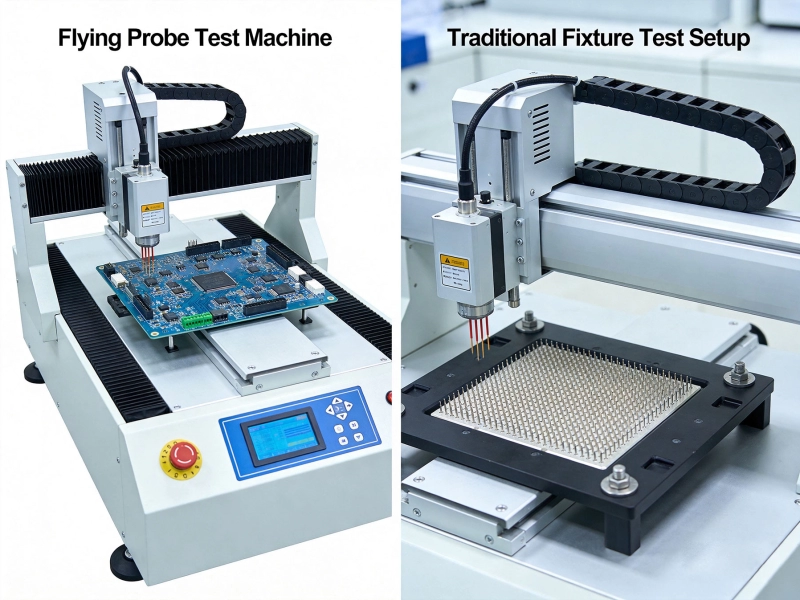
Flying Probe vs. Fixture Testing: Which is Best for HDI PCBs?June/11/2026
Precision in HDI FabricationJune/04/2026
Managing Heat in High-Power HDI Applications: A Practical GuideSeptember/03/2026

How HDI PCBs Power the Next Generation of SmartphonesJune/17/2026