
Heat kills electronics. Every watt that doesn't escape becomes thermal stress, degrading performance, accelerating wear, and eventually causing failure. As Hdi Boards pack more processing power into smaller spaces, managing heat becomes one of the most critical design challenges in modern electronics.
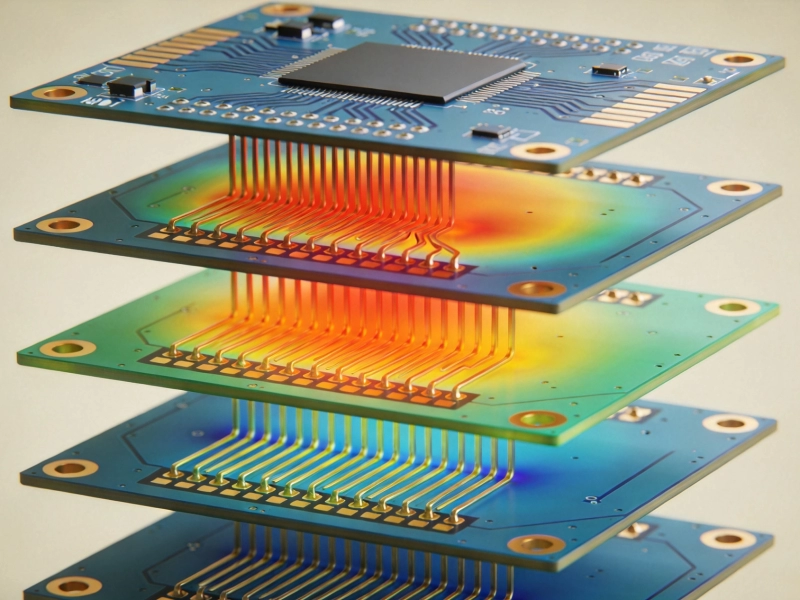
Traditional cooling approaches—external heat sinks attached with thermal adhesive, fans, or large copper pour areas—work for conventional boards. But Hdi Technology pushes past these limits. When components sit millimeters apart on boards thinner than a credit card, conventional cooling simply won't fit. This is where advanced Thermal Management technologies step in: copper coin and embedded heat sinks bring cooling directly where it's needed, inside the board itself.
These technologies represent a fundamental shift in how designers approach Thermal Management. Instead of managing heat after it's generated, embedded cooling puts thermal management infrastructure exactly where heat originates. The result: higher power densities, smaller packages, and improved reliability.
Before exploring solutions, understanding why Hdi Boards present unique thermal challenges helps frame why conventional approaches fall short.
HDI boards concentrate components at levels impossible for conventional technology. Fine-pitch BGAs, chip-scale packages, and Microvias create dense assemblies where heat sources sit adjacent to heat-sensitive circuits. Thermal cross-talk between components increases, and there simply isn't room for conventional cooling approaches between parts.
Consider a smartphone processor: multiple power domains, memory, RF components, and sensors all occupy a board space smaller than a playing card. External heat sinks would add thickness incompatible with portable form factors. The thermal solution must work within the board stackup itself.
Modern semiconductor packages deliver more power from smaller footprints:
These power densities require Thermal Conductivity measured in hundreds of watts per meter-kelvin, far exceeding what FR-4 substrate or standard copper planes can achieve.
Temperature directly impacts electronic reliability. Every 10°C increase in operating temperature approximately doubles failure rate for most electronic components. For applications demanding long life—industrial, automotive, medical—thermal management isn't optional. It's a fundamental reliability requirement.
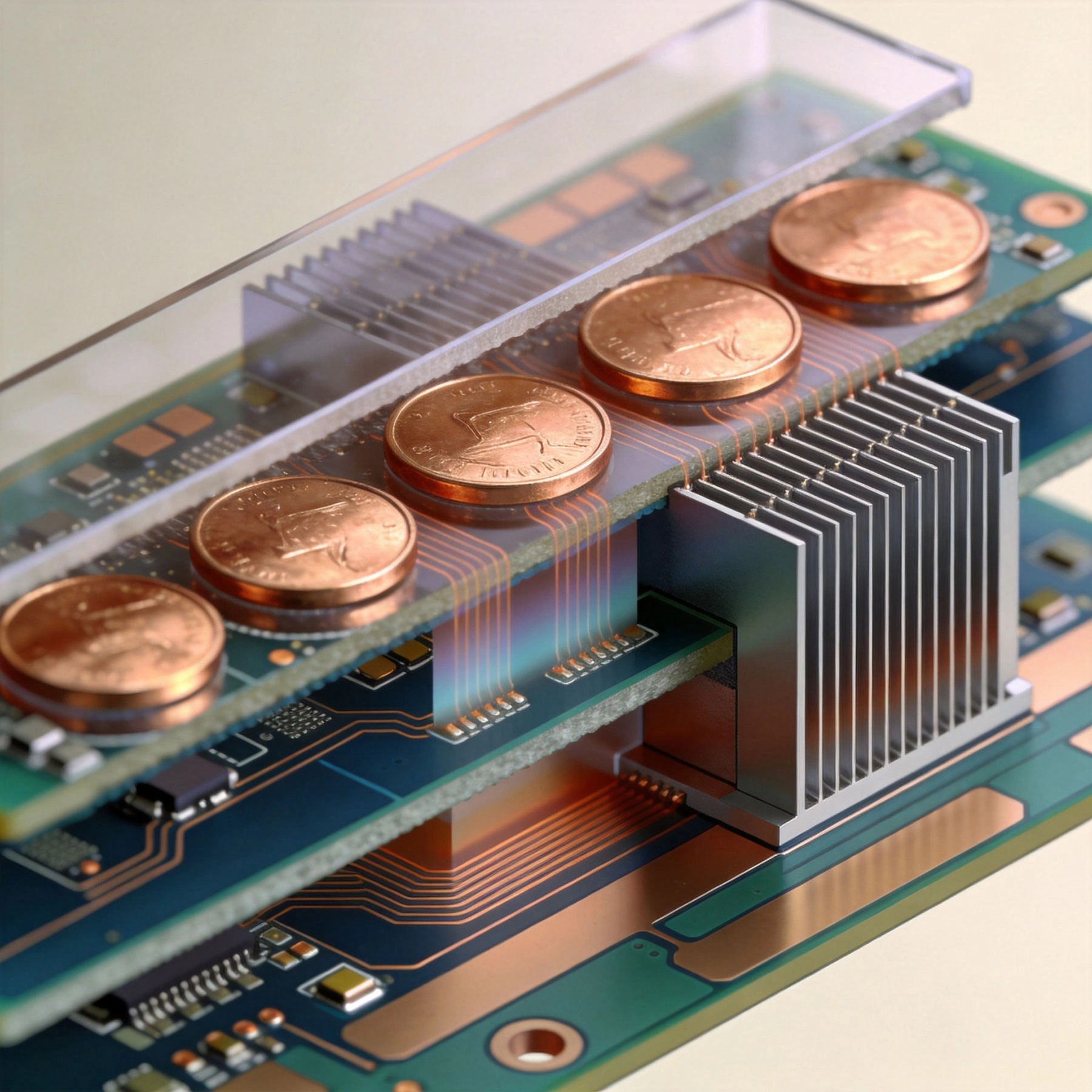
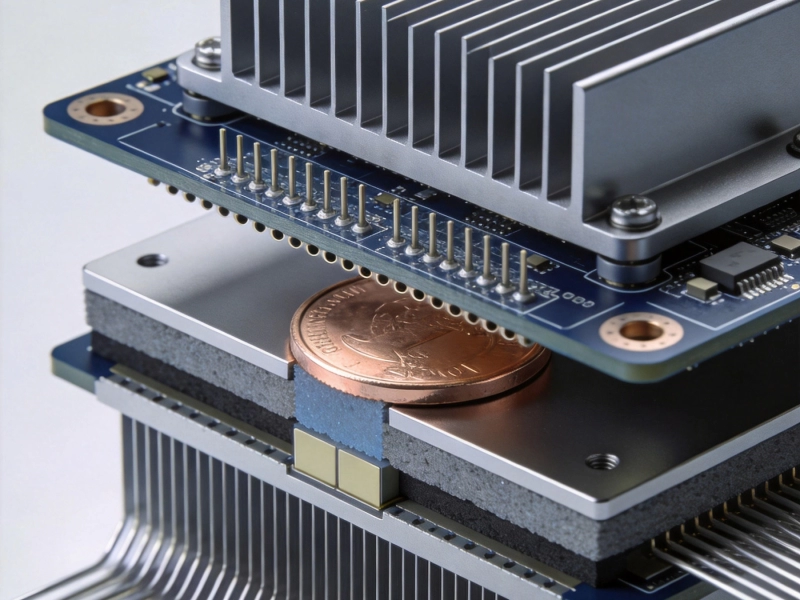
Copper coin technology embeds solid copper slugs directly into the PCB stackup beneath heat-generating components. These coins provide a direct thermal path from the heat source through the board to external cooling or the environment.
A copper coin is essentially a solid metal insert placed within the PCB layers during manufacturing:
The coin acts like a heat spreader, distributing thermal energy from the concentrated source across a larger area where it can dissipate more effectively.
Copper coins integrate into standard Pcb Manufacturing with specialized steps:
This integration happens during board fabrication, making the thermal path part of the board itself rather than an attachment.
Copper coins come in several configurations:
Copper coin Thermal Performance dramatically exceeds conventional approaches:
While copper coins address concentrated point sources, embedded heat sinks provide thermal management over larger areas. These structures integrate actual heat sink geometries inside the board.
Embedded heat sinks extend thermal management beyond simple coins to include:
These approaches create internal thermal infrastructure previously impossible in conventional PCBs.
Multiple manufacturing techniques create embedded heat sink structures:
Coin Insertion
Metal Core Boards
Selective Plating
Embedded heat sinks combine naturally with Hdi Technology:
Implementing copper coin and embedded heat sink technology requires attention to specific design factors.
The thermal path extends from semiconductor junction through multiple interfaces:
Each interface introduces thermal resistance. Careful attention to surface preparation, flatness, and interface materials optimizes the complete path.
Embedded metal structures interact with board mechanical properties:
Experienced manufacturers design around these factors through careful material selection, geometry optimization, and process control.
While thermal conductivity matters, electrical considerations often drive design:
Design for manufacturability becomes more critical with embedded thermal structures:
Copper coin and embedded heat sink technology works with various substrate materials, but material selection significantly impacts performance.
FR-4 and standard Pcb Materials work with embedded thermal structures:
For demanding applications, advanced materials complement embedded cooling:
Board stackup must accommodate thermal structures:
Boards with embedded thermal structures require specific testing to validate thermal performance.
Manufacturing quality directly impacts thermal performance:
Several application categories drive demand for embedded thermal management.
5G base stations concentrate significant power in small footprints:
Embedded cooling enables the form factors and power densities these systems require.
Modern vehicles pack increasing electronics density:
Automotive reliability requirements demand robust thermal management that survives vehicle lifetimes.
Industrial applications value proven reliability:
Long service life and demanding environments push thermal requirements higher.
Medical devices combine portability with performance:
Size constraints and reliability requirements make embedded cooling attractive.
Implementing copper coin and embedded heat sink technology requires manufacturing partners with specific capabilities.
Evaluate potential partners for:
Early engagement with manufacturing partners improves outcomes:
Clear specifications ensure manufacturing alignment:
Embedded thermal structures add cost compared to conventional boards, but the benefits often justify the investment.
As HDI technology pushes electronic packaging density higher, thermal management becomes a limiting factor. Copper coin and embedded heat sink technologies provide thermal infrastructure embedded within the board itself, enabling power densities and form factors impossible with conventional cooling approaches.
These technologies represent proven solutions deployed across demanding applications: 5G infrastructure, Automotive Electronics, industrial systems, and medical devices all benefit from embedded thermal management. The combination of superior thermal performance, improved reliability, and space efficiency makes embedded cooling increasingly essential for advanced electronics.
Successfully implementing embedded thermal structures requires thoughtful design, appropriate material selection, and manufacturing partners with demonstrated capability. Early engagement with experienced manufacturers helps optimize designs for both thermal performance and manufacturing efficiency.
Whether you're developing next-generation mobile devices, high-power infrastructure equipment, or reliability-critical industrial systems, embedded thermal management offers a path to thermal performance previously impossible in conventional Pcb Technology.
Copper coins are solid copper slugs providing thermal paths for concentrated heat sources. Embedded heat sinks include more complex structures—coin arrays, metal cores, or finned structures—that spread heat over larger areas. Copper coins represent a subset of embedded heat sink technology.
Compared to thermal vias alone, copper coins typically reduce thermal resistance by 50-80%. Exact improvement depends on coin size, board stackup, and external cooling conditions. Thermal modeling or prototype testing quantifies performance for specific designs.
Yes, rigid-flex boards can incorporate copper coins in rigid sections while maintaining flexibility elsewhere. This combination works for applications requiring both high-density thermal management and dynamic flexing.
Boards with copper coins or embedded heat sinks typically require 2-4 weeks additional lead time compared to standard boards. The exact timeline depends on complexity, volume, and manufacturer capacity. Quick-turn options may be limited for complex thermal structures.
Include location relative to component mounting surface, dimensions, depth extension through board, surface finish requirements, and thermal performance targets. Thermal Simulation or benchmarking against existing designs helps establish requirements. Work with your manufacturer to finalize specifications based on their capabilities.
Effective Thermal Management Strategies for High-Density PCBsMay/28/2026
Exploring the 6 Types of HDI Structures: From Type I to Any-LayerAugust/14/2026
The Role of Thermal Vias in Dissipating Heat from HDI BoardsJune/09/2026
The Impact of Via-in-Pad on Thermal Performance and ReliabilitySeptember/26/2026
Managing Heat in High-Power HDI Applications: A Practical GuideSeptember/03/2026
Selecting the Right Dielectric Materials for High-Performance HDI PCBsMay/28/2026
Thermal Management Strategies for HDI Power ModulesSeptember/11/2026
How to Use Thermal Simulation Software to Optimize HDI LayoutsJuly/29/2026