
Modern vehicles increasingly define their value through electronic experiences, with in-vehicle infotainment systems and digital instrument clusters becoming primary purchase decision factors. These sophisticated displays require PCB technologies that deliver high density, superior Signal Integrity, and reliable operation in challenging automotive environments. HDI (High Density Interconnect) solutions address the demanding requirements of automotive displays, enabling the rich visual experiences that contemporary drivers expect while meeting stringent Automotive Quality and reliability standards.
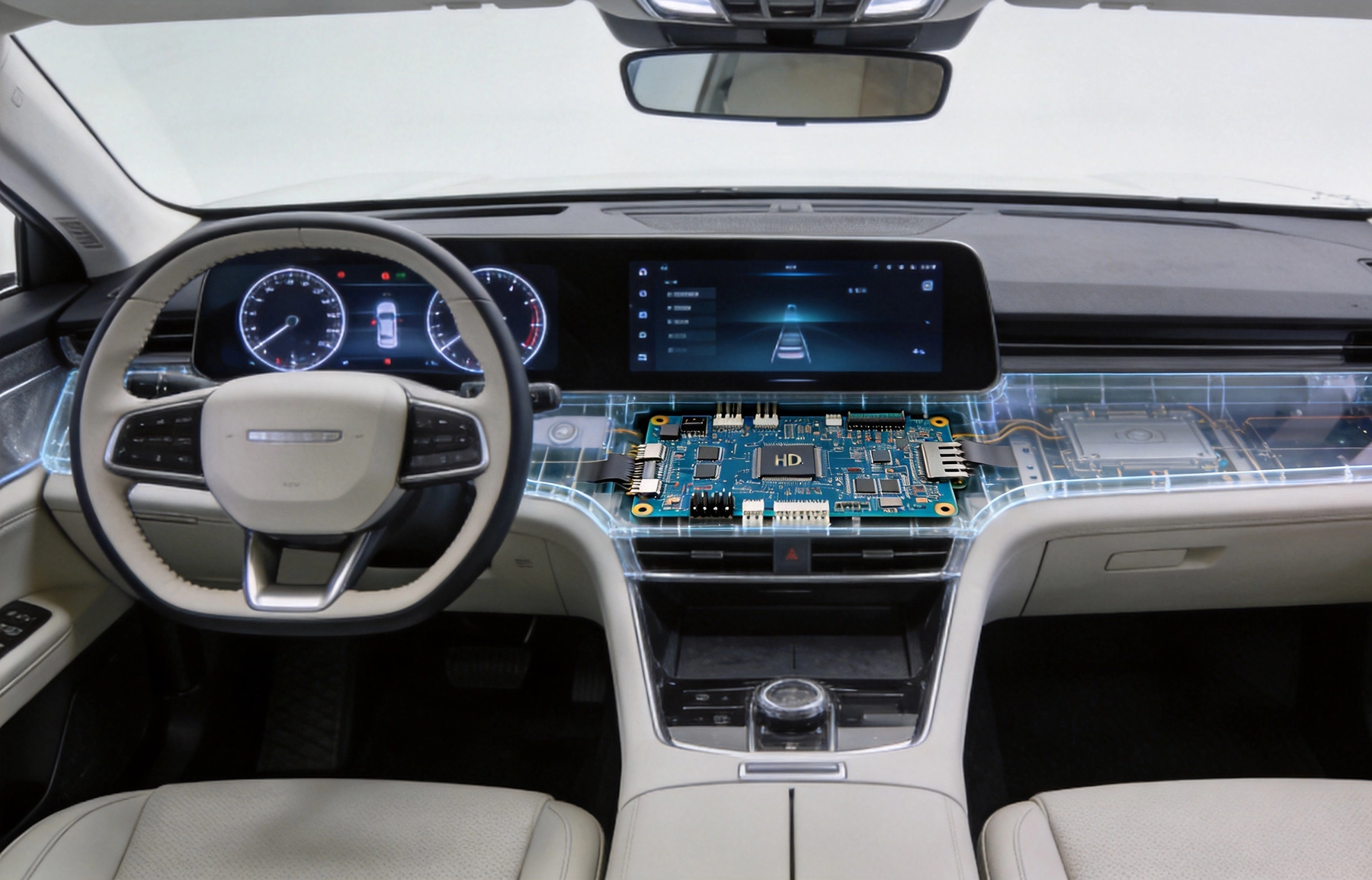
Vehicle displays have progressed far beyond simple analog gauges and basic radio interfaces. Today's infotainment systems integrate navigation, entertainment, smartphone connectivity, voice assistants, and vehicle configuration into unified touchscreen experiences. Instrument clusters have transformed from mechanical dial assemblies to fully digital displays showing realistic gauge graphics, warning indicators, and driver assistance visualizations.
This display revolution creates PCB challenges that earlier Automotive Electronics never faced. Consumer electronics-style user experiences must operate within automotive reliability constraints spanning fifteen years and beyond. The processing power required for high-resolution graphics demands semiconductor packages with hundreds of pins, while display interfaces require high-speed data transmission with impeccable Signal Integrity.
Automotive display suppliers increasingly adopt HDI technologies to meet these converging requirements. The density capabilities of HDI enable compact module designs while maintaining the Thermal Management and reliability that automotive applications demand. Understanding HDI implementation in automotive displays helps engineers design systems that succeed in this demanding market.
Automotive display modules face density challenges that exceed many consumer electronics applications. Display driver ICs connect to hundreds of segments through fanout patterns requiring fine trace widths and spacing. Processor packages with ball counts exceeding four hundred pins need reliable fanout to routing layers. Memory subsystems demand controlled impedance for DDR interfaces operating at gigabit-per-second speeds.
HDI construction using Microvias enables these density requirements within constrained board areas. Sequential Lamination building up multiple HDI layers concentrates routing density where component packaging demands it while using standard processes elsewhere. This optimization balances manufacturing feasibility against density requirements.
The mechanical integration of display modules into vehicle dashboards imposes additional constraints. Display boards often feature non-standard shapes accommodating curved surfaces and styling requirements. These irregular geometries challenge Hdi Manufacturing while maintaining yield and reliability. Panel utilization strategies that nest display shapes efficiently help manage costs while accommodating mechanical integration requirements.
Display backlight systems and processing electronics generate significant heat that must dissipate to maintain component reliability. Automotive environments compound thermal challenges through wide operating temperature ranges, direct sunlight exposure, and limited airflow in dashboard installations. HDI solutions must accommodate Thermal Management without compromising density advantages.
Thermal via arrays connecting component pads to ground planes provide heat sinking for power-dissipating devices. The Thermal Conductivity of copper combined with thermal via density determines heat transfer effectiveness. Careful thermal modeling during design ensures adequate thermal paths without over-designing that wastes routing space.
Metal core substrates offer enhanced Thermal Performance for high-power display applications. Aluminum or copper cores directly conduct heat away from processing components, maintaining lower operating temperatures than standard FR-4 constructions. These substrates add cost but enable reliable operation in thermal environments that would challenge standard constructions.
Component placement optimization considers thermal interaction between heat-generating devices. Processing ICs positioned near display drivers create thermal coupling that raises temperatures for both components. Thermal Simulation during layout identifies problematic configurations that can be addressed through component repositioning or added thermal management features.
Modern automotive displays receive video data through high-speed serial interfaces operating at multiple gigabits per second. Automotive SerDes (Serializer/Deserializer) solutions like Automotive SerDes Alliance (ASA) standards provide these connections with dedicated shielding and fault tolerance required for safety-related displays. HDI routing must preserve signal integrity for these critical paths.
Controlled impedance transmission lines maintain signal quality for high-speed differential pairs. HDI constructions with consistent dielectric properties enable accurate impedance calculation and manufacturing verification. The tight tolerances required for automotive applications demand process control exceeding consumer electronics standards.
EMI emissions and susceptibility requirements for automotive applications exceed commercial standards. Display modules must operate reliably in electromagnetically hostile environments while not generating interference affecting other vehicle systems. HDI construction with dedicated ground planes provides shielding that reduces both emissions and susceptibility.
Return path continuity for signal traces ensures predictable impedance behavior. Vias interrupting return currents create impedance discontinuities that degrade signal quality. Careful routing planning maintains return path integrity through strategic placement of ground vias and continuous reference planes.
Automotive Electronics operate under quality management systems defined by Iatf 16949, replacing the previous ISO/TS 16949 standard. Display modules for safety-related functions like backup cameras or blind spot monitoring fall under functional safety standards requiring systematic development processes. HDI solutions for these applications must integrate into quality systems that trace every component and process parameter.
Temperature cycling durability tests verify board reliability across the automotive operating range. HDI constructions using polyimide or high-Tg materials withstand temperature extremes that would delaminate standard FR-4. Thermal cycling to -40°C and +105°C or higher validates that Microvia structures survive thousands of cycles without failure.
Vibration testing confirms that HDI assemblies maintain integrity despite mechanical stress from vehicle operation. Components and solder joints must survive sustained vibration without fatigue cracks. Board stiffening through mounting design and material selection contributes to vibration survivability.
Highly Accelerated Stress Testing (HAST) exposes HDI assemblies to elevated temperature and humidity conditions that accelerate failure mechanisms. This testing identifies reliability weaknesses before field deployment, enabling design improvements that prevent customer-visible failures.
Display driver ICs present the primary routing density challenge for HDI display assemblies. These chips connect to hundreds or thousands of display segment electrodes through fanout patterns that must route from fine-pitch packages to broader routing layers. HDI Microvia Technology enables efficient fanout that would be impossible with through-hole construction.
Via-in-pad technology allows direct connection from component pads to internal routing layers, eliminating fanout stub lengths that consume routing space. However, standard plating processes produce unreliable barrel plating for Via-in-pad configurations. Filled and capped via processes provide reliable connections while maintaining planar surfaces for component mounting.
Layer count optimization balances routing density against manufacturing cost. Display assemblies using eight or ten HDI layers achieve density requirements while remaining manufacturable at acceptable yields. More aggressive density might require additional layers with corresponding cost implications.
Fine-pitch component packages continue shrinking, requiring ongoing Hdi Technology advancement to maintain fanout feasibility. Monitoring packaging trends ensures that HDI capabilities remain adequate for next-generation display requirements.
Dense graphics processing requires substantial memory bandwidth delivered through DDR interfaces operating at increasing data rates. Automotive DRAM solutions operate at reduced speeds compared to consumer applications, trading some performance for enhanced reliability. HDI routing must accommodate DDR signal integrity requirements within display module constraints.
Fly-by topology for DRAM address and command signals improves signal integrity compared to tree topologies used in consumer applications. This topology requires longer trace lengths that consume routing resources. HDI density enables implementing fly-by routing while maintaining adequate routing for other signals.
Impedance matching for DDR data signals becomes more critical as data rates increase. Stub lengths from via structures must be minimized to prevent signal reflections. HDI through-processes that eliminate stub lengths improve signal quality for these critical interfaces.
Memory component selection influences HDI routing complexity. Packages with larger ball pitch simplify fanout at the expense of board area. Package-on-package solutions stack memory atop processors, reducing board footprint but introducing assembly complexity and thermal challenges.
Capacitive touch screens have become standard for automotive infotainment systems, requiring interface electronics that detect finger proximity through protective cover glass. Touch controller ICs connect to transparent electrode patterns through flexible cable assemblies or direct board mounting. HDI solutions must accommodate touch interface requirements alongside display driver and processor connections.
EMI from touch controller circuits can interfere with display operation and vice versa. Shielding strategies using ground planes and strategic component placement reduce cross-interference. Touch controller placement considering display driver locations optimizes EMI isolation.
Flexible circuit connections between main boards and touch screen assemblies present reliability challenges. These connections must survive thermal cycling and vibration while maintaining electrical continuity. Robust connector selection and strain relief design contribute to connection reliability.
Vehicle interior design trends favor larger displays with narrower bezels, driving continued Miniaturization of display electronics. Display modules must deliver more processing power while occupying less volume. HDI solutions enabling maximum density help achieve these conflicting objectives.
System-in-package technologies integrate multiple chips into single packages, reducing board area requirements. While these solutions simplify board-level routing, they shift complexity to package-level assembly. The combination of SIP technology with HDI board construction provides density improvements at both levels.
Integrated display modules combine display glass, touch sensors, driver electronics, and backlight into complete assemblies. These integrated solutions reduce vehicle assembly complexity while placing display electronics in increasingly constrained spaces. Hdi Boards designed for these integrated modules must accommodate unique form factors and thermal requirements.
Electric vehicle designs accelerate display integration trends, with manufacturers eliminating traditional analog gauges in favor of fully digital interfaces. These designs drive demand for high-performance HDI solutions that enable sophisticated digital clusters within automotive cost constraints.
Hdi Manufacturing processes impose constraints that must inform design decisions. Minimum line widths, spacing, and via sizes vary by HDI layer class. Understanding manufacturing capabilities enables designs that achieve required density while maintaining acceptable yields.
Via aspect ratios affect drilling and plating feasibility. Microvia depth-to-diameter ratios must stay within manufacturer capabilities to ensure reliable barrel plating. Design rules established with specific manufacturers ensure that layouts accommodate process capabilities.
Panel utilization strategies influence HDI manufacturing economics. Display module shapes nested efficiently within panel formats maximize board yield. Standard panel sizes from qualified manufacturers simplify logistics while enabling competitive pricing.
Design verification through manufacturing review before layout completion identifies potential issues early. Collaboration between design engineers and HDI manufacturing specialists prevents problems that would delay production. This partnership approach benefits both parties through knowledge transfer and improved designs.
HDI manufacturing costs exceed standard PCB construction due to additional processing steps and tighter tolerances. Balancing cost against performance requires understanding where HDI density provides value versus where standard construction suffices. Strategic application of HDI only where density demands it optimizes overall cost.
Volume dramatically influences HDI economics. High-volume automotive production amortizes tooling and process development costs across large quantities, making HDI solutions economically viable. Low-volume applications face higher per-unit costs that might justify alternative approaches.
Manufacturing location affects HDI pricing significantly. Asian manufacturers have developed sophisticated HDI capabilities for consumer electronics, achieving scale economies that benefit automotive applications. However, supply chain considerations including logistics, tariffs, and continuity risks influence location decisions.
Total cost analysis considers more than PCB purchase price. Manufacturing yield, assembly costs, and field failure rates contribute to total cost of ownership. Higher HDI costs that improve reliability or reduce assembly complexity might lower overall cost despite higher component pricing.
Automotive displays continue evolving toward larger sizes, higher resolutions, and enhanced functionality. These trends will demand continued advancement in HDI capabilities to accommodate increasing density and performance requirements.
Emerging display technologies including OLED and micro-LED will impose new requirements on display electronics. These technologies may require different driver architectures, thermal management approaches, or signal interface characteristics. HDI solutions must evolve to accommodate these emerging requirements.
Advanced Driver Assistance Systems increasingly integrate with infotainment displays, sharing processing resources and display surfaces. This integration blurs boundaries between infotainment and safety systems, requiring HDI solutions that meet both entertainment and functional safety requirements.
Autonomous driving development creates new display requirements as vehicles assume more driving responsibility from human operators. Passenger-focused activities during autonomous operation may drive demand for even more sophisticated display experiences, accelerating technology advancement in this direction.
HDI solutions provide essential capabilities for automotive in-vehicle infotainment systems and digital instrument clusters. The density, signal integrity, and reliability that Hdi Technology enables address the demanding requirements of these safety and value-critical automotive applications. Understanding HDI implementation considerations helps engineers design display systems that succeed in competitive automotive markets.
Successful HDI implementation requires collaboration between design engineers, Automotive Quality specialists, and manufacturing partners. The investment in establishing these relationships yields returns through reliable products that perform throughout vehicle service lives. As automotive displays continue advancing, this partnership approach becomes increasingly important.
The continued evolution of automotive displays toward larger, more sophisticated systems ensures ongoing demand for HDI innovation. Manufacturers investing in HDI capabilities position themselves to capture growth in this dynamic market segment while enabling vehicle experiences that define future automotive value.
How HDI Technology Supports Advanced Driver Assistance Systems (ADAS)June/25/2026
The Role of HDI in Avionics and Flight Control SystemsAugust/13/2026
The Role of HDI in Robotics and Motion Control SystemsAugust/10/2026
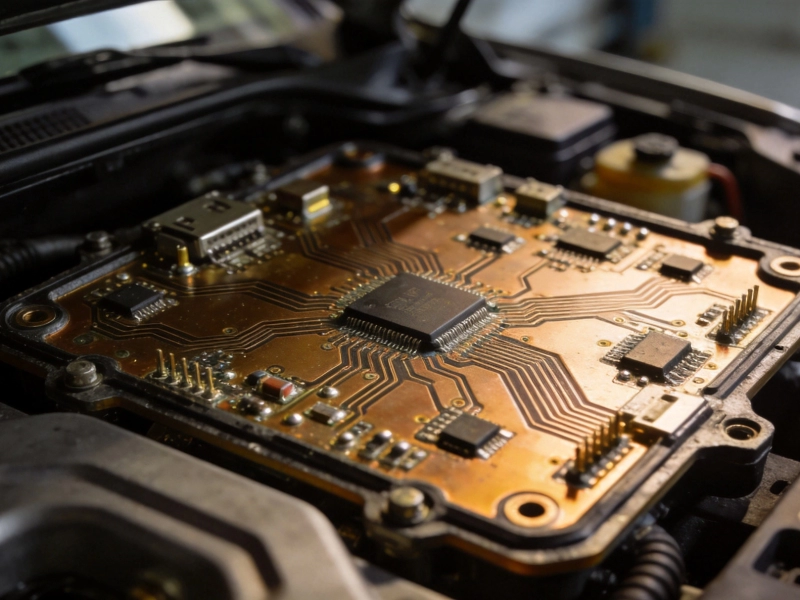
Meeting AEC-Q100 Reliability Standards for Automotive HDISeptember/14/2026
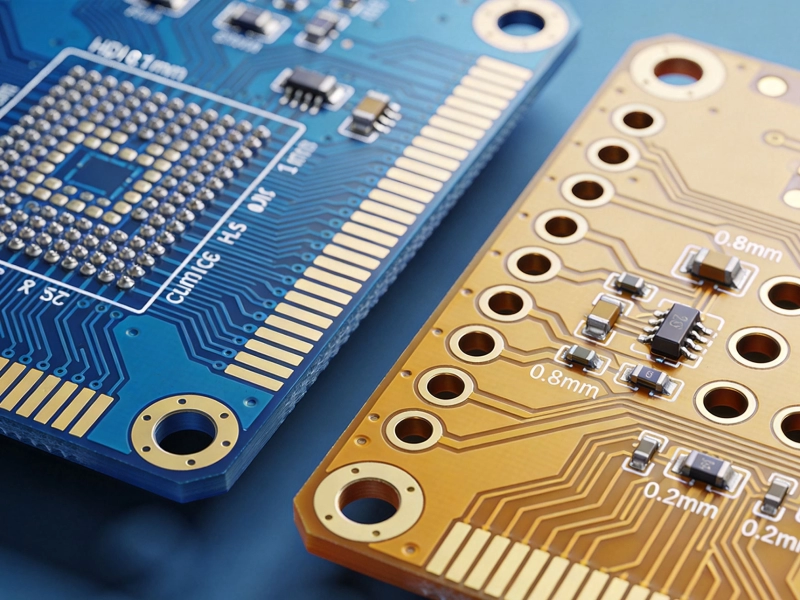
Understanding the Core Differences Between HDI and Traditional PCBsJuly/02/2026
Designing Automotive HDI Boards for Vibration and Shock ResistanceJuly/17/2026
How HDI Technology Enables the Miniaturization of Modern ElectronicsSeptember/20/2026
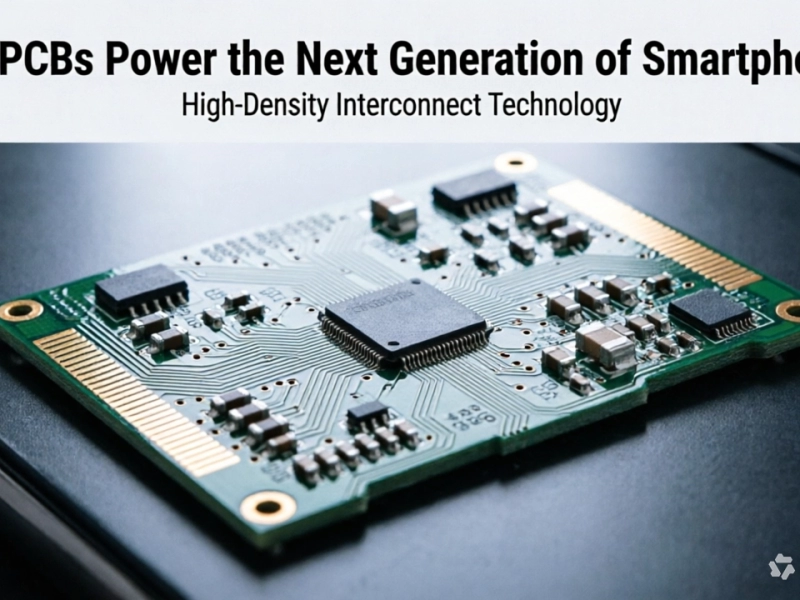
How HDI PCBs Power the Next Generation of SmartphonesJune/17/2026