
High-end industrial SMT projects occupy a demanding space in the Electronics Manufacturing landscape. These are not consumer-grade boards with forgiving tolerances and short product lives. They are the control systems, power conversion modules, communication infrastructure, and instrumentation platforms that must operate reliably in harsh environments for years of continuous service, often with zero tolerance for field failure. Choosing a manufacturing partner for this class of product is a decision with long-term consequences for product quality, development velocity, and your company's reputation in the market. China has built manufacturing capacity and expertise that makes it the world's primary electronics production center, but accessing that capability for high-end industrial work requires a more deliberate and informed approach than simply sending Gerber files to the lowest bidder. This guide examines what it takes to establish and maintain an effective partnership with a Chinese manufacturer for the kind of SMT projects where quality is not negotiable.

Before discussing how to select and manage a manufacturing partner, it is worth establishing what distinguishes a high-end industrial SMT project from standard commercial assembly. The distinction matters because it defines the capabilities you must verify in a prospective partner and the rigor with which you must manage the relationship.
High-end industrial projects typically involve one or more of the following characteristics: complex component mixes including fine-pitch BGAs, QFNs, and 0201 or smaller passives that demand precise placement and careful thermal profiling; boards with high layer counts and controlled impedance requirements that must be maintained through both fabrication and assembly; components with long procurement lead times or specialized sourcing requirements such as automotive-grade or military-spec parts; assemblies requiring conformal coating, potting, or other post-assembly processes that add complexity and quality risk; and products subject to regulatory requirements including automotive Iatf 16949, medical Iso 13485, or functional safety ISO 26262 that impose specific quality management obligations on the manufacturer.
The common thread is risk. High-end industrial projects carry higher consequences for failure, higher technical complexity in manufacturing, and higher expectations for process control and documentation than standard commercial work. A manufacturing partner for these projects must demonstrate capability beyond what suffices for consumer electronics, and verifying that capability requires more than comparing price quotes.
Any Chinese SMT manufacturer serving international clients will claim advanced capabilities and quality certifications. The challenge for prospective customers is distinguishing genuine capability from marketing claims. This evaluation requires looking at the facility's actual equipment, processes, people, and track record rather than relying on website descriptions or sales presentations alone.
Equipment matters because the machines on the production floor directly determine what the facility can produce. A manufacturer running modern pick-and-place equipment from leading vendors with placement accuracy specifications suitable for the component types in your project is fundamentally different from one using older or lower-precision machines, regardless of what either facility claims in its capabilities summary. Ask for specific equipment lists including machine models and vintage, and compare the stated specifications against the requirements of your most demanding assemblies. A facility that places 01005 components regularly will have different equipment, inspection tools, and process expertise than one whose experience is limited to 0603 passives and SOIC packages.
Reflow oven capability is equally important for high-end work. Lead-free assembly of complex boards with mixed thermal mass components—large power devices alongside tiny passive chips—requires ovens with sufficient zones and thermal control precision to maintain profiles that produce reliable joints across all component types. A facility that cannot demonstrate the profiling capability to handle your specific board complexity is not ready for your project, regardless of their other qualifications.
Inspection capability is the third leg of the equipment evaluation. Post-assembly AOI should be standard at any facility claiming industrial-grade capability, but the sophistication of the AOI system and the expertise of the programmers who set it up vary significantly. X-ray Inspection capability is essential for any assembly using BGAs, and the availability of incline or 3D X-ray for complex joint geometries distinguishes facilities equipped for truly high-end work from those that treat X-ray as an occasional Troubleshooting tool rather than a production inspection step.
Certifications such as ISO 9001, Iatf 16949, and ISO 14001 provide a baseline indication that a manufacturer has structured quality and environmental management systems, but the depth and effectiveness of these systems vary widely among certified organizations. A certificate on the wall does not tell you whether the quality system drives daily operational decisions or exists primarily to satisfy auditor requirements. Understanding how the quality system functions in practice requires more direct investigation.
Ask about the manufacturer's internal defect rate and how they track and respond to defects when they occur. A facility that can discuss its defect Pareto analysis, root cause investigation processes, and corrective action closure rates is one that uses its quality system actively rather than maintaining it as documentation. Request information about their statistical process control practices—whether they maintain SPC charts for critical process parameters like solder paste volume and placement offset, and how they respond when a parameter trends toward a control limit. A manufacturer that catches process drift before it produces defects is fundamentally more reliable than one that relies on post-process inspection to catch the results of drifted processes.
If your project requires IATF 16949 for automotive applications, verify that the manufacturer's certification scope specifically covers the product categories relevant to your work. IATF 16949 certification can be scoped to specific sites and product types, and a manufacturer certified for simple assemblies may not be certified to produce the complex boards your project requires. Similarly, if ISO 26262 functional safety is relevant, understand whether the manufacturer has experience with the specific ASIL level of your product and can provide the process evidence that functional safety standards demand.
The value of a manufacturing partnership extends beyond assembly execution. A strong partner provides engineering support that improves your design before it reaches the production floor, catching manufacturability issues that would otherwise become assembly defects, yield losses, or reliability problems. This design for manufacturability review capability is particularly valuable for high-end industrial projects where the cost of design revision after production is significant and the complexity of the assembly makes DFM issues more likely and more consequential.
Look for a manufacturer whose engineering team proactively reviews incoming design data and provides feedback on issues such as component spacing that may cause solder bridging, land patterns that do not match the component specification, panelization approaches that affect assembly yield, and thermal profile challenges created by the mix of component sizes and thermal masses on the board. This review should occur before production begins, not as an explanation for defects after the first run fails.
The quality of DFM feedback varies dramatically between manufacturers. Some provide detailed, actionable recommendations with specific dimensional data and alternative suggestions. Others offer generic comments that add little value. Evaluate the depth of a prospective partner's DFM capability by providing a sample design with known manufacturability challenges and reviewing the feedback you receive. A manufacturer who catches the embedded issues and provides constructive alternatives demonstrates the engineering engagement that justifies partnership beyond transactional assembly service.
High-end industrial SMT projects often involve components with specialized requirements—automotive-qualified parts, extended temperature range devices, obsolete or hard-to-source components—that make procurement more challenging than for standard commercial designs. A manufacturing partner's procurement capability directly affects your project's timeline, cost, and quality because component sourcing problems are the most common cause of production delays and the most insidious source of quality issues when unauthorized substitutions introduce non-conforming parts into the assembly.
A capable Chinese manufacturer maintains procurement relationships with authorized distributors and component manufacturers that provide access to genuine parts with proper documentation and traceability. They should be able to discuss their authorized distribution relationships, their incoming inspection processes for verifying component authenticity, and their procedures for handling situations where a specified component is unavailable. For automotive and other safety-related applications, the procurement process must ensure that only components qualified to the required specification grade are used, with no exceptions that could compromise the integrity of the finished assembly.
Long lead time components require particular attention in project planning. A manufacturer who identifies long-lead items early, communicates the procurement timeline transparently, and coordinates material staging so that all components are available when the production window opens provides a level of supply chain management that significantly reduces the risk of production delays. Discuss your project's component landscape with prospective partners and evaluate their approach to managing the procurement complexity your specific bill of materials presents.
Counterfeit component prevention is an unavoidable topic when manufacturing in China, where the volume of electronic components passing through the market creates opportunities for counterfeit parts to enter the supply chain. A reputable manufacturer addresses this risk through authorized sourcing, incoming inspection with component verification, and lot traceability that links every component on a finished board to its source. Ask specifically about their counterfeit prevention practices and how they handle situations where a suspect component is identified during incoming inspection.
The working relationship with a Chinese manufacturing partner requires more intentional communication management than a domestic relationship, but the time zone difference and language considerations are manageable when both parties commit to clear, structured communication practices. The quality of the working relationship often determines whether a partnership thrives over multiple projects or collapses after the first production run.
Assign a dedicated project manager or technical liaison on your side who maintains regular communication with the manufacturer's account team. This person serves as the single point of contact for technical questions, schedule updates, and issue resolution, preventing the confusion that arises when multiple people on both sides communicate independently without coordination. Weekly or bi-weekly status calls—scheduled at times that accommodate the time zone difference—provide a regular forum for reviewing progress, discussing upcoming milestones, and addressing any concerns before they escalate.
Written communication should be the standard for any technical specification, design change, or process decision. Verbal agreements are difficult to verify after the fact, and the combination of language differences and time zone delays makes misunderstandings more likely when important details are communicated only in conversation. Follow every significant discussion with written confirmation that documents what was agreed, and maintain a running log of design and process changes that provides a clear record of the project's evolution.
English language capability varies significantly among Chinese manufacturers, and the quality of technical communication depends heavily on the English proficiency of the specific people you work with. A manufacturer who assigns an experienced, English-fluent project engineer to your account provides a level of communication clarity that dramatically reduces the risk of misunderstandings. When evaluating prospective partners, conduct technical conversations that test the communication capability of the actual team who would manage your work, not just the sales representative who handles the initial inquiry.
First article approval is a critical milestone in any manufacturing partnership, and for high-end industrial projects it deserves more thorough attention than a quick visual check and a functional test. The first articles produced by your new partner establish the baseline for process capability and assembly quality, and any issues not caught at this stage will propagate through production until something triggers an investigation.
First article inspection should verify every dimension, every solder joint, and every component placement against the design specification. For BGA components, X-ray Inspection of the first article confirms solder ball formation, wetting, and the absence of voids that could compromise joint reliability. For through-hole components, cross-sectioning a sample of critical joints verifies barrel fill and intermetallic formation. Electrical testing of the first article against the full test specification confirms functional performance before you approve the manufacturer to proceed with volume production.
Production ramp-up should follow a structured plan that gradually increases volume as process capability is confirmed, rather than jumping directly from first article to full production. This approach limits exposure if a process issue surfaces at higher volumes and provides time to fine-tune processes based on the initial production data. A manufacturing partner who recommends conservative ramp-up demonstrates the kind of risk-awareness that you want in a partner for high-end industrial work.
The most successful manufacturing partnerships deliver increasing value over time as both parties learn from each other and optimize their collaboration. A manufacturer who understands your product requirements, your quality expectations, and your design philosophy through accumulated experience becomes an extension of your own engineering and operations teams, providing insights and capabilities that a new supplier cannot match. Investing in building this depth of relationship pays returns across every subsequent project you run together.
Share your quality data with the manufacturer—field return analysis, customer complaints, and test failure patterns—so they can connect their process decisions to your field outcomes. This feedback loop is essential for continuous improvement because it closes the information gap between what happens on the production floor and what matters to your customers. A manufacturer who understands which defects cause field failures and which are caught reliably before shipment can focus their improvement efforts where they create the most value for your business.
Periodic business reviews that discuss performance metrics, upcoming project requirements, and opportunities for process improvement maintain alignment between your expectations and the manufacturer's understanding of your needs. These reviews should be candid and constructive, addressing both successes and areas where improvement is needed. A partnership where both parties can discuss problems openly and work toward solutions together is far more valuable than one where issues are suppressed to avoid difficult conversations.
How do we verify a Chinese manufacturer's equipment claims before committing?
Request a detailed equipment list with machine models, vintage, and capability specifications. During a facility visit or virtual tour, verify that the equipment you see matches the list provided. Ask to observe the specific line type that would produce your boards in operation.
What should a first article inspection cover for a high-end industrial Smt Assembly?
A thorough first article inspection covers dimensional verification, complete solder joint examination including X-ray for hidden joints, component verification against the bill of materials, and full electrical and functional testing against the product test specification.
How do we handle design changes after production has started?
Document the change in writing, including the technical description and the effective date. Coordinate with the manufacturer to implement the change at a defined production breakpoint, and run a verification build to confirm that the change was implemented correctly before resuming full production.
Is it realistic to expect English-language engineering support from a Chinese manufacturer?
Yes, manufacturers who serve international clients typically employ English-proficient project engineers and account managers. The quality of technical English varies, so evaluate communication capability with the specific team who would manage your account during the selection process.
What ongoing quality data should we expect from our manufacturing partner?
Expect regular reporting on assembly yield, defect Pareto analysis, SPC data for critical process parameters, and traceability records for each production batch. The frequency and detail level should be agreed upon during partnership setup and reviewed periodically.
Contact us to discuss your requirements and learn how our experience as a China manufacturing partner for high-end industrial SMT projects supports your production goals with the quality and reliability your products demand.

HDI PCBs in Industrial IoT (IIoT) and Smart Factory SensorsJune/29/2026
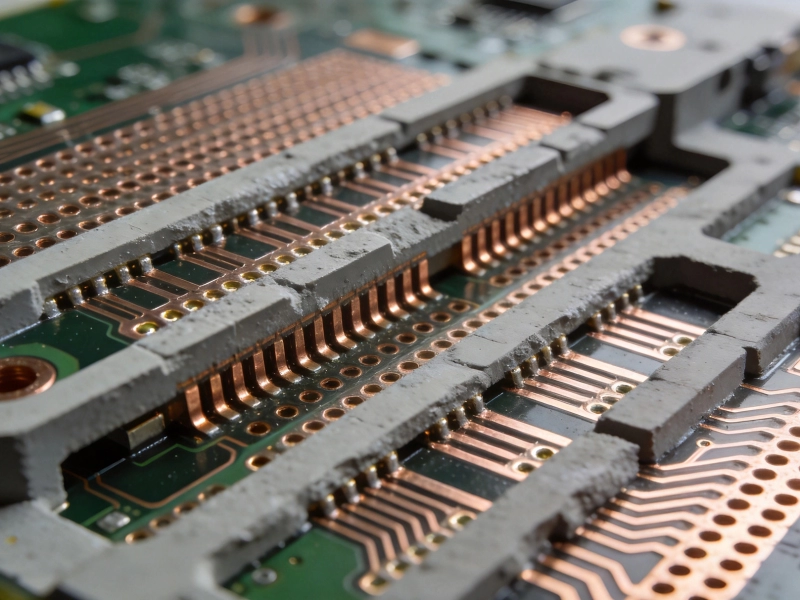
Designing Rugged HDI Boards for Harsh Industrial EnvironmentsJuly/20/2026
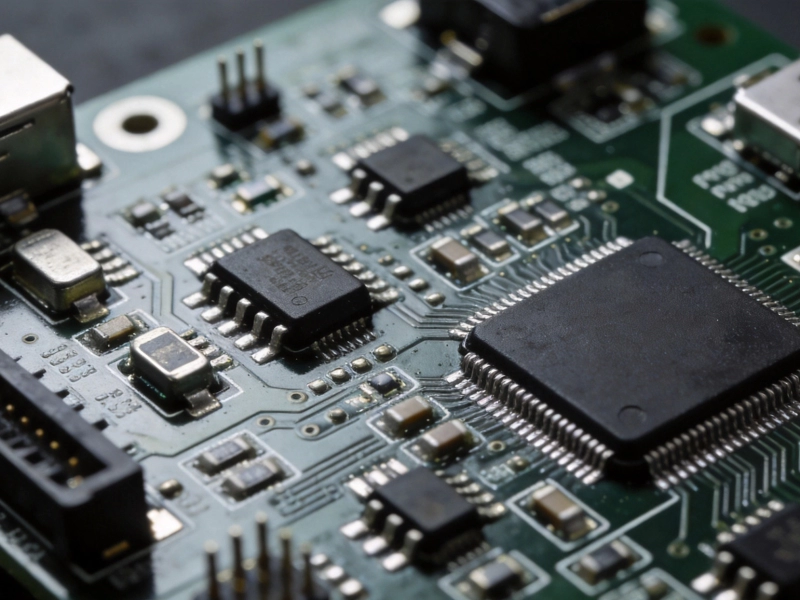
High-Reliability HDI Solutions for PLCs and Motor DrivesSeptember/16/2026
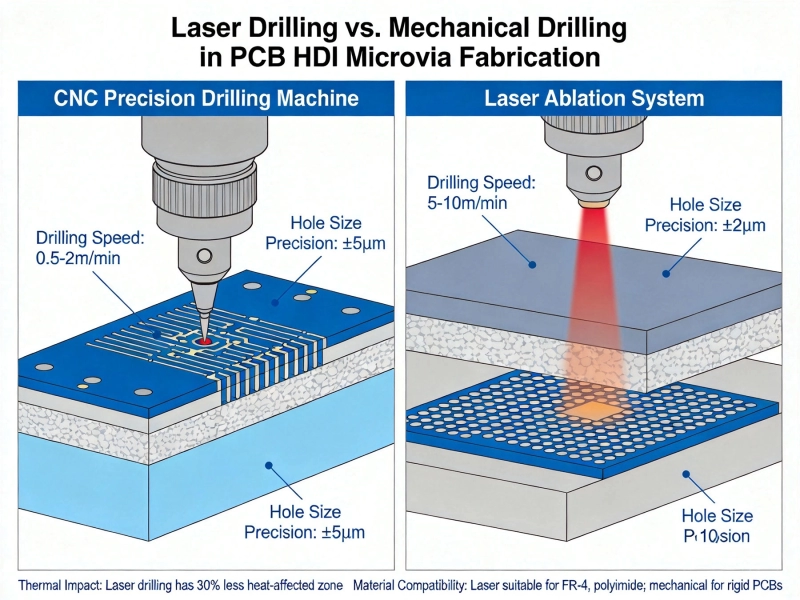
Precision in HDI FabricationJune/04/2026

Copper Coin and Embedded Heat Sinks: Advanced Cooling for HDIJuly/08/2026

High-Reliability Standards for HDI in Life-Critical Healthcare EquipmentAugust/11/2026

How HDI PCBs Power the Next Generation of SmartphonesJune/17/2026

How HDI Technology Supports Advanced Driver Assistance Systems (ADAS)June/25/2026